Ask for hanging plants safe for cats and the species half of the answer comes back easily: spider plant, Boston fern, string of turtles, a Christmas cactus. What none of the lists ask is where the basket will actually hang. Hooks come with the ceiling and brackets come with the curtain rod; neither was placed with a plant in mind. So this page starts where the others stop. We took the trailers with a clean safety entry and scored the places they usually end up, because a plant that is safe for the cat can still be wrong for the hook.

Worth a try
It can work here with a little care.
A little dim, but workable
Comfortable temperature
Humidity suits it
Airflow isn't quite ideal
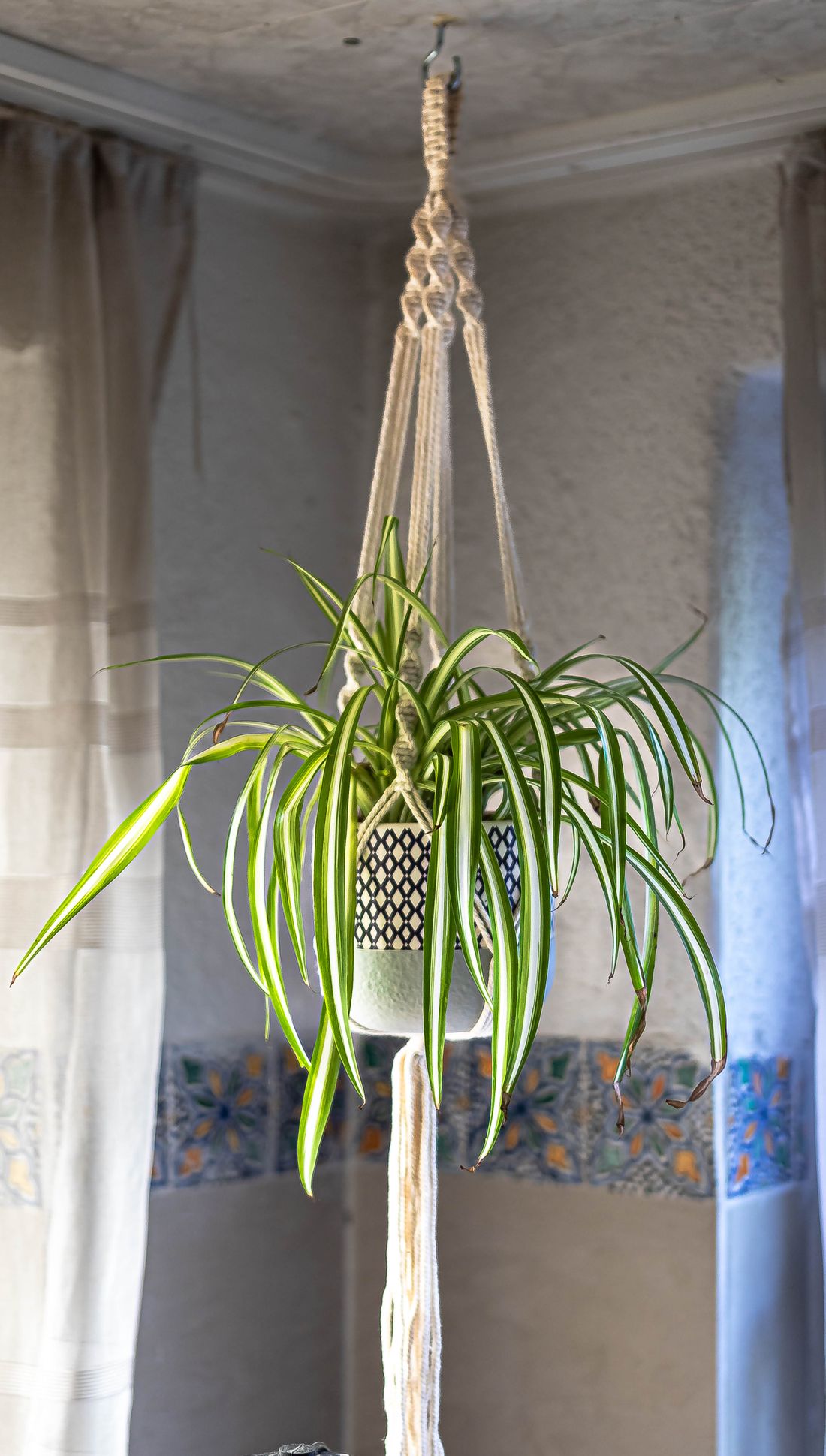
First, what safe means here. Our care data carries a pet-safety entry per plant, mirrored from the ASPCA list, and the entries name cats and dogs both. Where the ASPCA has no entry we record unknown and keep the plant off this page: goldfish plant and string of hearts, both regulars on trailing lists elsewhere, sit out for exactly that reason. The list this page swaps out is the awkward part. Golden pothos, string of pearls and English ivy all carry toxic entries, and between them they are most of what actually hangs in living rooms. If the spot you are filling is a dim shelf or a floor corner rather than a hook, the cat-safe answer for low light is its own page.
The hook decides as much as the species
The safe half looks like the settled one: the ASPCA publishes an entry per species, and these are six of its entries, safe and toxic both, in its own words.
| Plant | What the ASPCA files it as | As written |
|---|---|---|
| Spider plant · aspca.org | Non-toxic | “Non-Toxic to Dogs, Non-Toxic to Cats”. Filed as Chlorophytum comosum, Asparagaceae, with no clinical signs listed. |
| Boston fern · aspca.org | Non-toxic | “Non-Toxic to Dogs, Non-Toxic to Cats”. Filed as Nephrolepis exalta bostoniensis, Dryopteridaceae. |
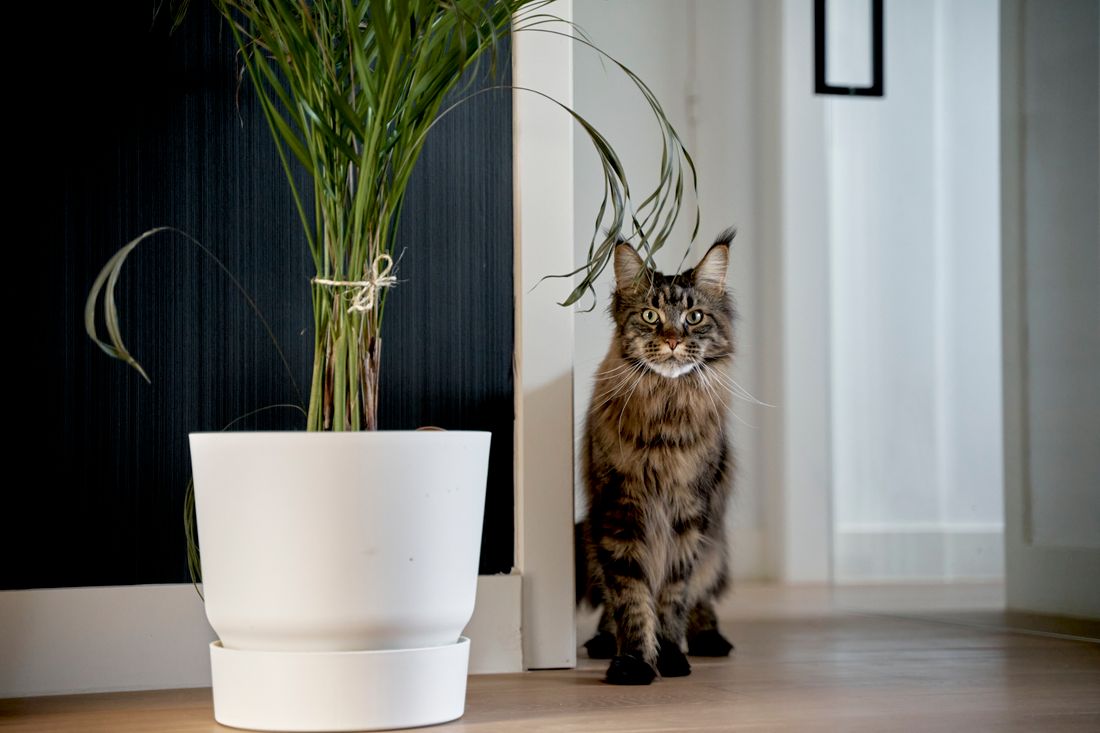
| Parlor palm · aspca.org | Non-toxic | “Non-Toxic to Dogs, Non-Toxic to Cats”. Filed as Chamaedorea elegans, Palmae. |
| Golden pothos · aspca.org | Toxic | “Toxic to Dogs, Toxic to Cats”. Principle: “Insoluble calcium oxalates”. Signs: “Oral irritation, intense burning and irritation of mouth, tongue and lips, excessive drooling, vomiting, difficulty swallowing.” |
| Peace lily · aspca.org | Toxic | “Toxic to Dogs, Toxic to Cats”, with the same principle and the same list of signs as the pothos above. |
| Snake plant · aspca.org | Toxic | “Toxic to Dogs, Toxic to Cats”. Principle: “Saponins”. Signs: “Nausea, vomiting, diarrhea.” |
Hang a spider plant beside an east window and our checker reads 94 out of 100. Walk the same plant into the room one hook at a time and nothing changes for two metres; between two and three, the score drops to 66. That cliff sits exactly where ceiling hooks tend to live: brackets hug the window wall, but the hook the last tenant left is usually mid-room, past the three-metre line, in what the light estimate treats as a different climate.
That is our reading of the spot. On whether height settles the other half of the question, the published advice splits, and the split is worth seeing before you put a hook in the ceiling.
| Published by | What it says about where the plant sits | In its own words |
|---|---|---|
| vet.cornell.edu | Height is not the guarantee | “The only way to guarantee protection for both your houseplants and your cat is to block access to the plants.” |
| extension.illinois.edu | Hanging is the fix | “Hang plants out of reach of pets.” |
| vet.cornell.edu | Harsher than the entries above | “While most plants are harmless, several can be deadly.” |
| ucanr.edu | English ivy: quantity is the variable | “Animals need to ingest large quantities of this trailing vine to cause serious problems.” |
| vet.cornell.edu | Why a cat goes for it at all | “Cats may chew on plants as part of their normal investigation and play, or they may simply be craving vegetable matter in their diets.” |
A veterinary school and an extension service are both talking about placement here and they do not agree, so the honest version of this page’s advice is that a hook buys distance rather than a guarantee.
| Distance from the window | Estimated light | What the light is doing | Verdict |
|---|---|---|---|
| 0.5 m back | 6,300 lux | Just the right amount of light | Great fit, 94/100 |
| 1 m back | 5,000 lux | Just the right amount of light | Great fit, 94/100 |
| 2 m back | 3,150 lux | Just the right amount of light | Great fit, 93/100 |
| 3 m back | 1,984 lux | A little dim, but workable | Worth a try, 66/100 |
| 3.5 m back | 1,575 lux | A little dim, but workable | Worth a try, 65/100 |
None of that is about height. Our estimate has no height term at all: it asks how far the spot sits from the glass, not how high it floats above the floor. Sorting hooks by light alone lands on pothos and heartleaf philodendron for the dim ones. If there is a cat in the house, that shortcut is the part to give up.
Distance in that table is estimated rather than metered, so the honest companion to it is the measured readings we publish: 204 of them, taken at 104 real spots, as aggregates you can download and check the estimate against.
Six safe trailers, one bracket
Park the whole shortlist on one bracket beside an east window and safety stops being the variable. A Christmas cactus reads 99 there. Spider plant, string of turtles and Swedish ivy sit at 94, a Boston fern at 91, and a burro’s tail at 65, because the bracket’s morning light is dimmer than the sun a trailing sedum wants. The flag made the list look interchangeable. The bracket says otherwise.
| The trailer on that bracket | What the light is doing | Verdict |
|---|---|---|
| Christmas cactus | Just the right amount of light | Great fit, 99/100 |
| Spider plant | Just the right amount of light | Great fit, 94/100 |
| String of turtles | Just the right amount of light | Great fit, 94/100 |
| Swedish ivy | Just the right amount of light | Great fit, 94/100 |
| Boston fern | Just the right amount of light | Great fit, 91/100 |
| Burro's tail | A little dim, but workable | Worth a try, 65/100 |
The fern row deserves one more sentence: its 91 comes with the air at that bracket already sitting on the dry side of what it likes. Give it the same light in damper air and it stops losing points at all, which is where this goes next.
The bathroom cliché, hanging
Hold the bracket still and move nothing but moisture. At 35 percent the fern reads 66, and humidity is the bar that fails. At 45 it climbs to 88, and from 65 up it holds 100. That is the whole case for where a fern hangs: a hook near a bathroom window beats the same hook in a heated living room, and neither has anything to do with safety.
One boundary, so the numbers stay honest: we estimate the light and air at a spot from how you describe it, not from a sensor in your ceiling. A meter would beat us at reading your exact hook, and the distance page shows the same falloff for plants that sit rather than hang. What the estimate is for is the decision this page keeps making: which safe trailer belongs on which hook. Describe the hook to the free spot checker (window direction, distance from the glass, the trailer you have in mind) and it scores that spot for that plant, in the browser, nothing to install.
By GrowSpot · Published August 15, 2026 · Last updated August 30, 2026
