Ask about a monstera in a south window and the summary at the top of the results tells you to set it two to six feet from the glass, or to hang a sheer curtain. A long-running houseplant blog underneath says an unobstructed south-facing window gives you more light than any other window in the house. A video with several hundred thousand views says the opposite in practice: she keeps hers close to the glass in east and south windows.
Two to six feet is a strange kind of instruction, because it implies that six feet is meaningfully safer than two. Scored at four distances in a room at 22 °C and 50% humidity, that is not what happens.

Worth a try
It can work here with a little care.
A bit bright, but workable
Comfortable temperature
Humidity suits it
Airflow isn't quite ideal
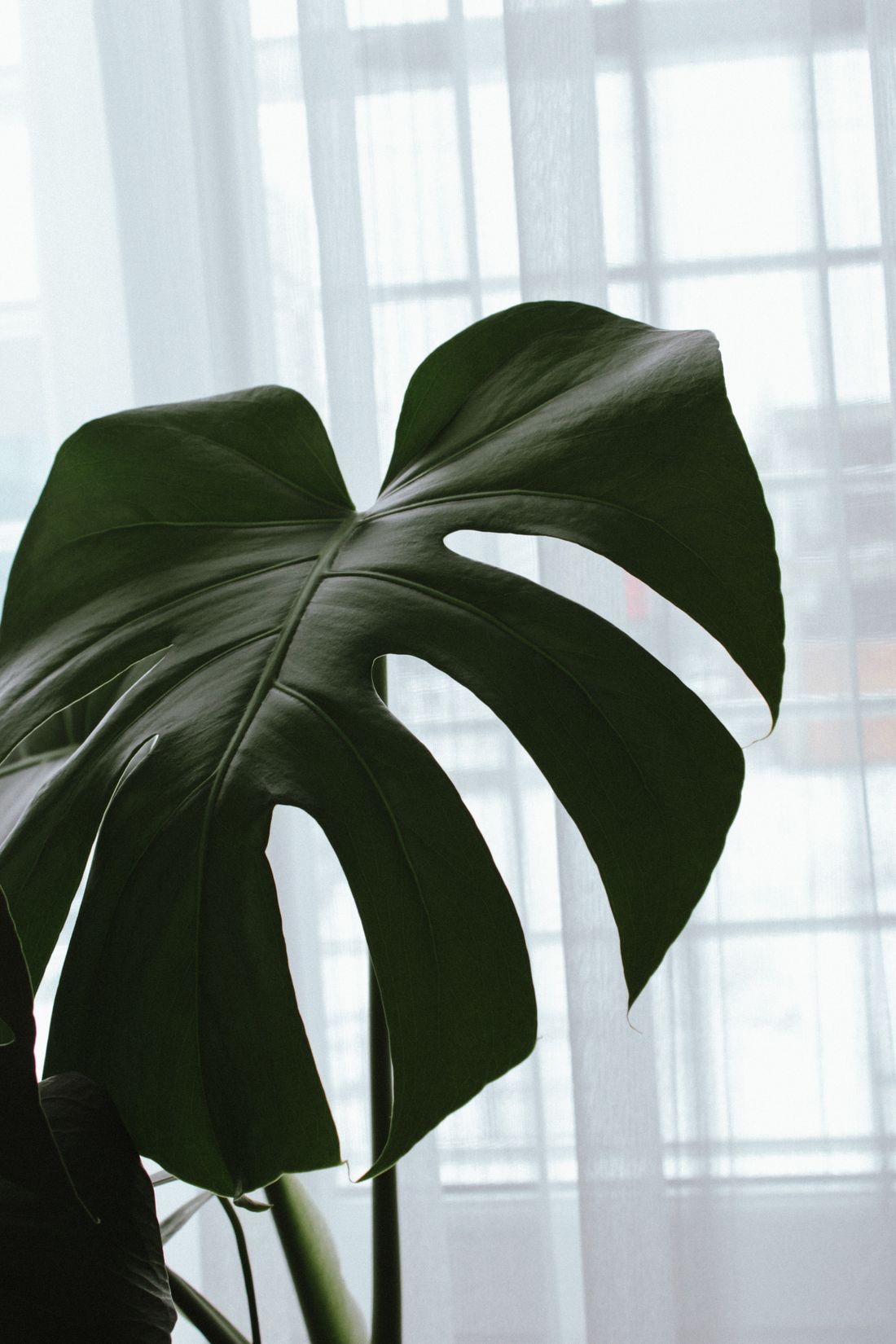
Can a monstera deliciosa take a south-facing window?
Before our own scoring says anything: we gathered every published figure we could find for a monstera. 9 of them, from 5 separate sources, in 3 different units. They are reproduced below exactly as each source writes them, and nothing here is converted.
| Who publishes it | What it says a monstera needs | What the figure is |
|---|---|---|
| theplantrunner.com | 800–2,000+ lux | Standard foliage plants (pothos, Philodendron, Monstera deliciosa …) — a general band, not a single-species figure |
| theplantrunner.com | 1,500–5,000 lux | Light-hungry aroids & Ficus divas (Fiddle Leaf Fig, variegated Monstera) |
| growlightmeter.com | 8 – 12 PPFD / DLI | Monstera |
| houseplantjournal.com | 100 FC (20 µmol) foot-candles | minimum indirect light level |
| houseplantjournal.com | 200 FC (40 µmol) foot-candles | good indirect light level |
| houseplantsnook.com | 50–100 foot-candles | chart fc level |
| houseplantsnook.com | 200–400 foot-candles | chart fc level |
| soltech.com | around 288–325 PPFD / DLI | Monstera FAQ — large / extra-large plant PPFD |
| soltech.com | 80–500 PPFD / DLI | Monstera — Photone's published PPFD range, cited by Soltech |
Yes, as long as it is off the sill: one metre back is already a great fit, and so are two metres and three. The only distance that scores differently is the glass itself, flagged for light at 65/100.
The useful instruction is therefore not a range. It is a single line, drawn between the sill and the first metre. Scored across every orientation at once, that line turns out to be one of only two edges this plant has: full marks run from about 2,800 lux to 10,000, and the sill sits just past the top of it.
The numbers by distance
| Distance from the glass | Estimated light | What the light is doing | Verdict |
|---|---|---|---|
| 0.3 m, against the glass | 13,000 lux | A bit bright, but workable | Worth a try, 65/100 |
| 1 m back | 10,000 lux | Just the right amount of light | Great fit, 93/100 |
| 2 m back | 6,300 lux | Just the right amount of light | Great fit, 94/100 |
| 3 m back | 3,969 lux | Just the right amount of light | Great fit, 94/100 |
Past about a metre they stop changing: 65/100 at the glass, then 93/100 at one metre and 94/100 at two and three metres alike. The reason three numbers are identical is that this plant’s comfortable band is wide, and everything from a metre back sits inside it. A wide band is good news for a room, because it means the plant is not asking you to find one precise ledge. It is asking you not to press it against hot glass.
It is also why the published advice for this plant arrives as a band rather than a line — two to six feet is the common one — and why a band is hard to act on: its near end is still on the flagged side of the table, and its far end is a metre past the point where nothing further changes. The line is about a metre, and after that the answer stops moving.
Those light values are estimates built from direction and distance on a clear day. Checking your own window is free, and it uses live weather for your location rather than a clean assumption.
The same plant, the opposite instruction
In a north-facing window this plant runs the other way: 99/100 on the sill there, and flagged at the back of the room, because a north window at three metres is dim rather than bright. The north-window scoring is here.
One plant, two windows, and two instructions that sound like they contradict each other: keep it close, keep it back. At an east window it is neither instruction: the score holds all the way from the glass out to seven feet. Neither is about the room. Both are about where the light lands.
A fiddle leaf fig in the same window runs the other way again, and putting the two columns side by side is the clearest version of the point:
| Distance from the glass | Monstera | Bambino fiddle leaf fig |
|---|---|---|
| 0.3 m against the glass13,000 lux | 65/100 | 100/100 |
| 1 m back10,000 lux | 93/100 | 100/100 |
| 2 m back6,300 lux | 94/100 | 98/100 |
| 3 m back3,969 lux | 94/100 | 66/100 |
Read the two columns downward and they cross. The spot that is worst of the four for one plant is joint best for the other, and nothing about the window changed between the columns. The fiddle leaf fig has its own page for this window.
What the sill actually costs
Flagged is not dead: 65/100 is a cost, not a failure. At 13,000 lux the light dimension reads bright but tolerable, which in practice means the plant survives on a south sill and pays for it in ways people usually blame on watering: pale patches on the leaves that face the glass, crisping along the edges in high summer, and soil that dries so fast the plant is thirsty between waterings that used to be fine.
Moving it a metre solves all three at once, which is why the fix for a struggling south-window monstera is so often furniture rather than fertiliser.
One metre is enough here and nowhere near enough for some neighbours: a philodendron is still flagged at two metres and needs the full three.
What about a sheer curtain?
It is the other half of the standard advice, and it works. What nobody can tell you is by how much, because a curtain is not a standard object. A thin voile takes a slice off the peak; a heavy linen takes most of the window. Two rooms with the same orientation, the same distance and different curtains are two different spots, and no guide written in advance can score them.
Distance is also not the only thing that can be held still. Take the mild day away from the three-metre spot and it is a great fit at 21 °C and at 27 — but only worth a try at 30 and at 16, and not a fit at all at 33 or at 10.
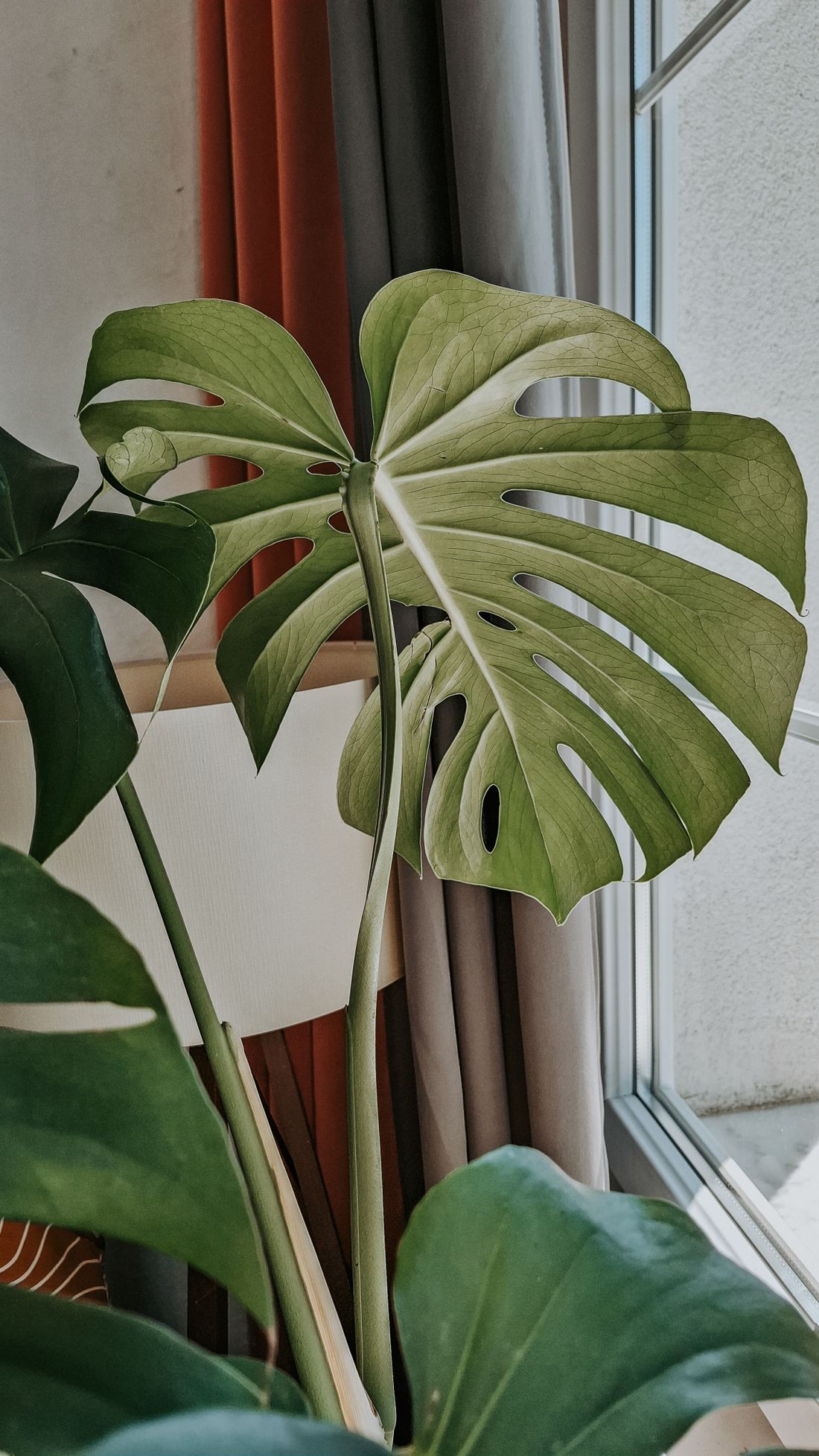
The cold end is the one that catches people out, because a spot that scored well all summer is the same spot in February with a draughty window behind it.
That is the honest limit of any distance table, this one included. A table assumes clear glass. If you have a curtain, blinds, a deep balcony overhang or a building across the street, the number that matters is the one at your plant rather than the one in the example, which is the whole reason the checker exists.
One metre is the whole difference for this plant, and it is not alone: the rest of the south-window list is sorted the same way, by whether a plant takes the beam or wants it filtered.
Fenestration is a light question
Splits are a light story: a monstera in a spot that scores 94/100 keeps producing larger leaves with more holes as it climbs, while one kept alive in a dim corner produces small, solid leaves and holds them — which reads as a plant that is fine because nothing looks damaged. Why a monstera stops splitting goes through the rest of it.
How it tells you the spot is wrong
- Too much light: bleached or yellowed patches on the leaf faces pointed at the window, with the shaded side of the plant untouched.
- Too little light: new leaves smaller than the old ones and solid rather than split, plus long bare stem between leaves.
- Brown crispy edges: usually dry air or thirst rather than sun, especially in a south room in summer.
The room is not the spot
We put a phone down in six places in one living room on a clear afternoon:
| Spot | Reading |
|---|---|
| At the bright window | 20,000 lux |
| 1 m from the window | 15,000 lux |
| 2–3 m away, in window shade | 3,500 lux |
| Middle of the room | 570 lux |
| Darker side of the room | 119 lux |
| The dark corner | 18 lux |
That room’s orientation was never written down, so those are not south-window figures and we are not presenting them as any. What carries over is the steepness. How steep, exactly, is in the room measured at six points.
Published August 10, 2026 · Last updated August 30, 2026
