The summary above the results says peace lilies can handle a west-facing window as long as you keep them a few feet back or filter the afternoon sun, and then gets specific: three to five feet from the glass. It also says east windows are the better choice, and warns that a dark corner will keep the plant alive without ever letting it flower.
All of that is sound. The number is the part worth checking, because three to five feet is roughly one to one and a half metres, and scored in a room at 22 °C and 55% humidity, that is still inside the range our engine flags.

Worth a try
It can work here with a little care.
A bit bright, but workable
Comfortable temperature
Humidity suits it
Airflow suits it
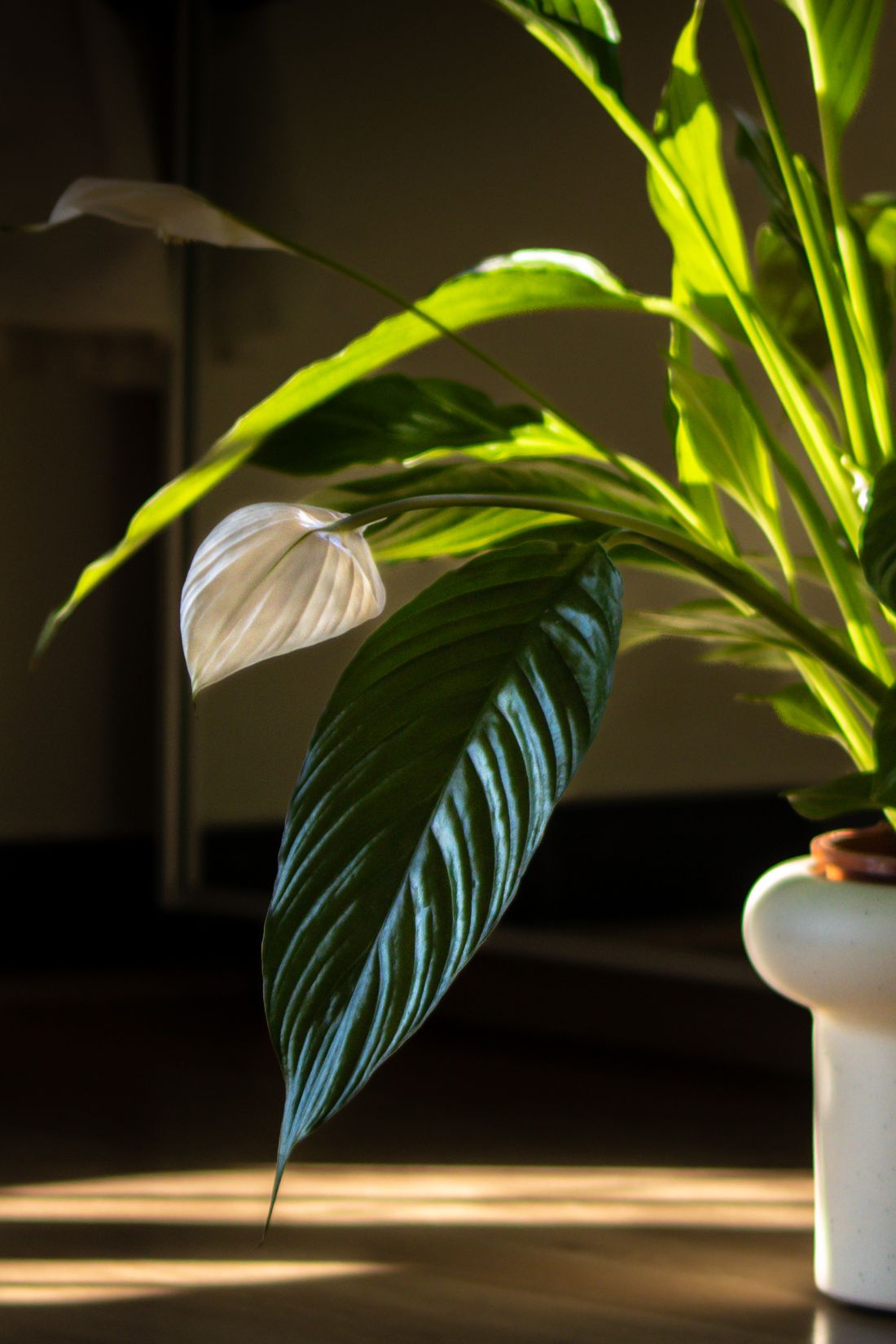
Can a peace lily live in a west-facing window?
Before our own scoring says anything: we gathered every published figure we could find for a peace lily. 6 of them, from 5 separate sources, in 3 different units. They are reproduced below exactly as each source writes them, and nothing here is converted.
| Who publishes it | What it says a peace lily needs | What the figure is |
|---|---|---|
| theplantrunner.com | 800–2,000+ lux | Standard foliage plants (pothos, Philodendron, Monstera deliciosa …) — a general band, not a single-species figure |
| houseplantjournal.com | 100 foot-candles | Peace Lily — minimum indirect light |
| houseplantjournal.com | 200 foot-candles | Peace Lily — good indirect light |
| growlightmeter.com | 5 – 10 PPFD / DLI | Peace Lily |
| extension.arizona.edu | 75–150 foot-candles | listed under the heading "Medium Light (75–150 fc)" |
| houseplantsnook.com | 50–100 foot-candles | chart fc level |
Yes, comfortably, at two metres back. That spot scores a great fit with all four dimensions in band, which is rare enough to be worth pointing at.
Closer in it is flagged rather than doomed. On the sill and at one metre the light dimension reads above this plant’s band, which for a forest-floor species is the expected complaint about an afternoon window.
The numbers by distance
| Distance from the glass | Estimated light | What the light is doing | Verdict |
|---|---|---|---|
| 0.3 m, against the glass | 7,800 lux | A bit bright, but workable | Worth a try, 64/100 |
| 1 m back | 6,000 lux | A bit bright, but workable | Worth a try, 66/100 |
| 2 m back | 3,780 lux | Just the right amount of light | Great fit, 99/100 |
| 3 m back | 2,381 lux | Just the right amount of light | Great fit, 100/100 |
Two metres is about six and a half feet, so the common advice is short by roughly a metre. That gap is the difference between a plant that is coping and a plant that is suited, and it costs nothing to close. Run your own window through the free checker if your room is a different shape.
West is a metre kinder than south
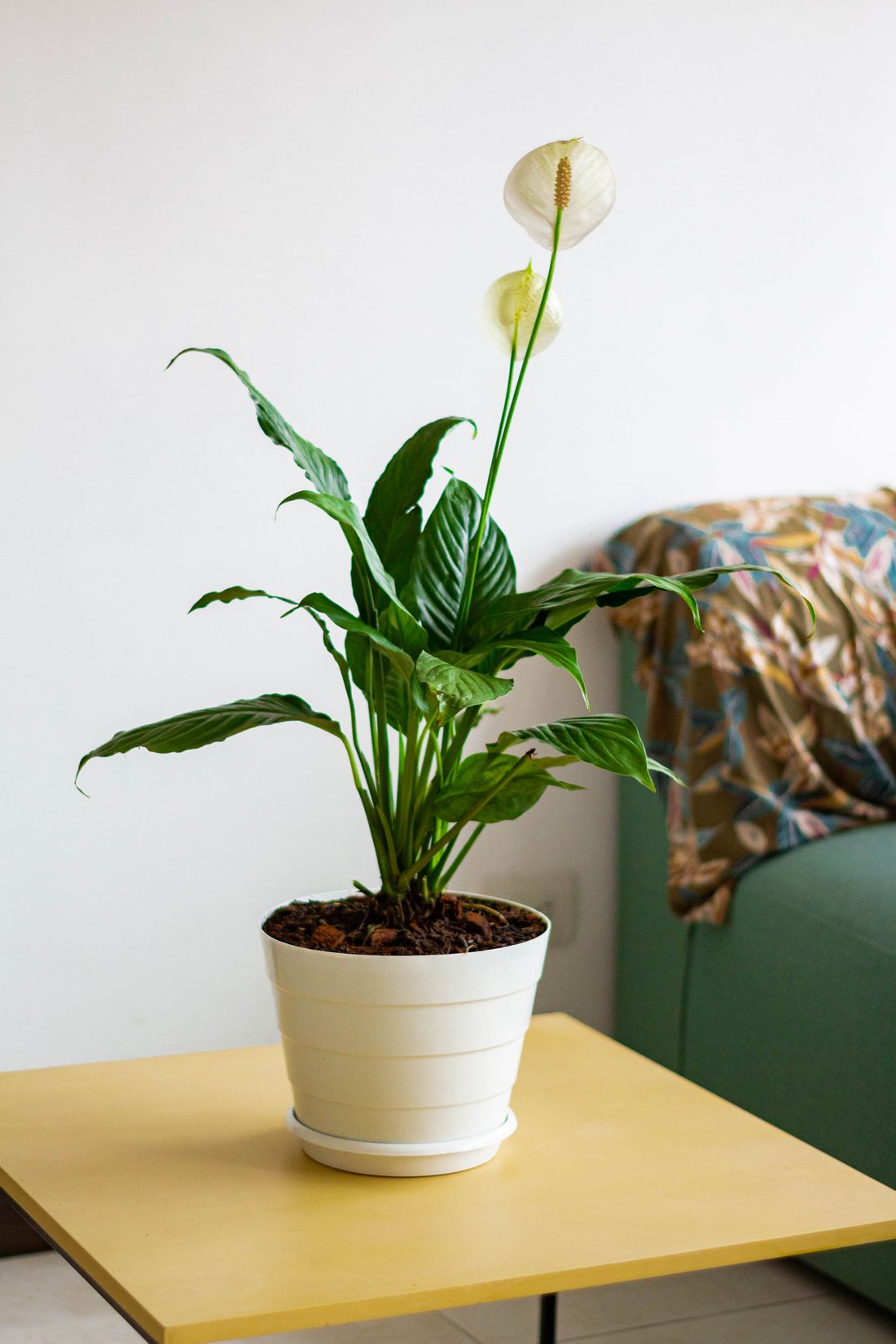
The same plant in a south-facing window needs three metres of clearance before it scores full marks, because south glass delivers roughly 13,000 lux where west delivers about 7,800. The south-window scoring is here.
One plant, two directions, and a full metre of difference in where you can stand it. That is the sort of thing an orientation label on its own cannot tell you, and it is why a guide that says avoid south and west in the same sentence is throwing away two different amounts of room.
Will it flower in a west window?
Blooming is the reason most people ask about this plant and a window in the same sentence. Light is the usual limit, so a spot that scores 99 out of 100 has taken light off the table as the explanation, and that is genuinely useful: it means a peace lily that sits two metres from a west window all year and still refuses to flower is telling you about something else. Where that band starts and stops in lux, across nine spots in one house, is on the peace lily light page.
The candidates then are age, pot size, and feeding, none of which we score and none of which we will pretend to measure from a light reading. What we can say is which variable has been ruled out, and in a room like the one above, light is the one that has.
Two metres is a comfortable ask in most rooms. Which plants take a west beam head-on and which want it filtered is the whole of the west-facing window plants guide.
What the score does not see
A west window heats late. Our scoring reads the air temperature of the room, not the temperature at the glass, so a sill that bakes from four in the afternoon looks the same to it as a cool one at the same room temperature. If the leaves feel hot to the back of your hand at five o’clock, treat that as a reason to move the plant back that the score has not counted.
The other honest boundary is humidity. This plant wants 50% and up, and it is the dimension that most often quietly fails in a bright room in summer. Here is what that costs, with the plant parked at the spot that clears the light flag:
| Humidity at the spot | Verdict |
|---|---|
| 25% | Worth a try, 64/100 |
| 35% | Good fit, 88/100 |
| 45% | Great fit, 95/100 |
| 55% | Great fit, 100/100 |
| 65% | Great fit, 100/100 |
Grouping plants together, a tray of damp pebbles under the pot, and keeping it out of the direct throw of an air conditioner all move that number. None of them is glamorous and all of them are worth more here than another half metre of distance.
The other pet-safe plant at this window fails a different test entirely: a spider plant’s ceiling is 27 °C, not the light.
How it tells you the spot is wrong
- Too much light: pale, washed-out leaves and bleached patches on the side facing the window, worst in late summer.
- Too little light: deep green healthy foliage and no flowers for a year. This plant keeps its leaves long past the point where it stops blooming, which is why a fine looking peace lily that never flowers is a light message.
- Brown crispy tips: usually air rather than sun. Check humidity before you move it.
- Dramatic collapse: thirst. Water it, wait an hour, and only then think about placement.
The room is not the spot
We put a phone down in six places in one living room on a clear afternoon:
| Spot | Reading |
|---|---|
| At the bright window | 20,000 lux |
| 1 m from the window | 15,000 lux |
| 2–3 m away, in window shade | 3,500 lux |
| Middle of the room | 570 lux |
| Darker side of the room | 119 lux |
| The dark corner | 18 lux |
That room’s orientation was never written down, so those are not west-window figures and we are not presenting them as any. What carries over is the steepness. The full set of readings is in one room, six spots, glass to darkest corner.
By GrowSpot · Published August 10, 2026 · Last updated August 30, 2026
