Basement plant lists are all answering one question: which plants tolerate low light? It is the right question for a dark corner upstairs. It is only a quarter of the question down here.
A basement moves all four of our dimensions away from where the rest of the house sits: the light is far worse than it looks, the air runs nearer 17 °C than 21, the humidity is high, and nothing moves the air at all. Only three of those are problems — the damp turns out to be worth almost nothing in either direction, which is a finding of its own and one we come back to. Of the three that matter, two are settled by the building before you get a say. The third costs about the price of a small fan, and it is the one the lists never mention.

Worth a try
It can work here with a little care.
A little dim, but workable
A little cool, but workable
Humidity suits it
Airflow doesn't suit it
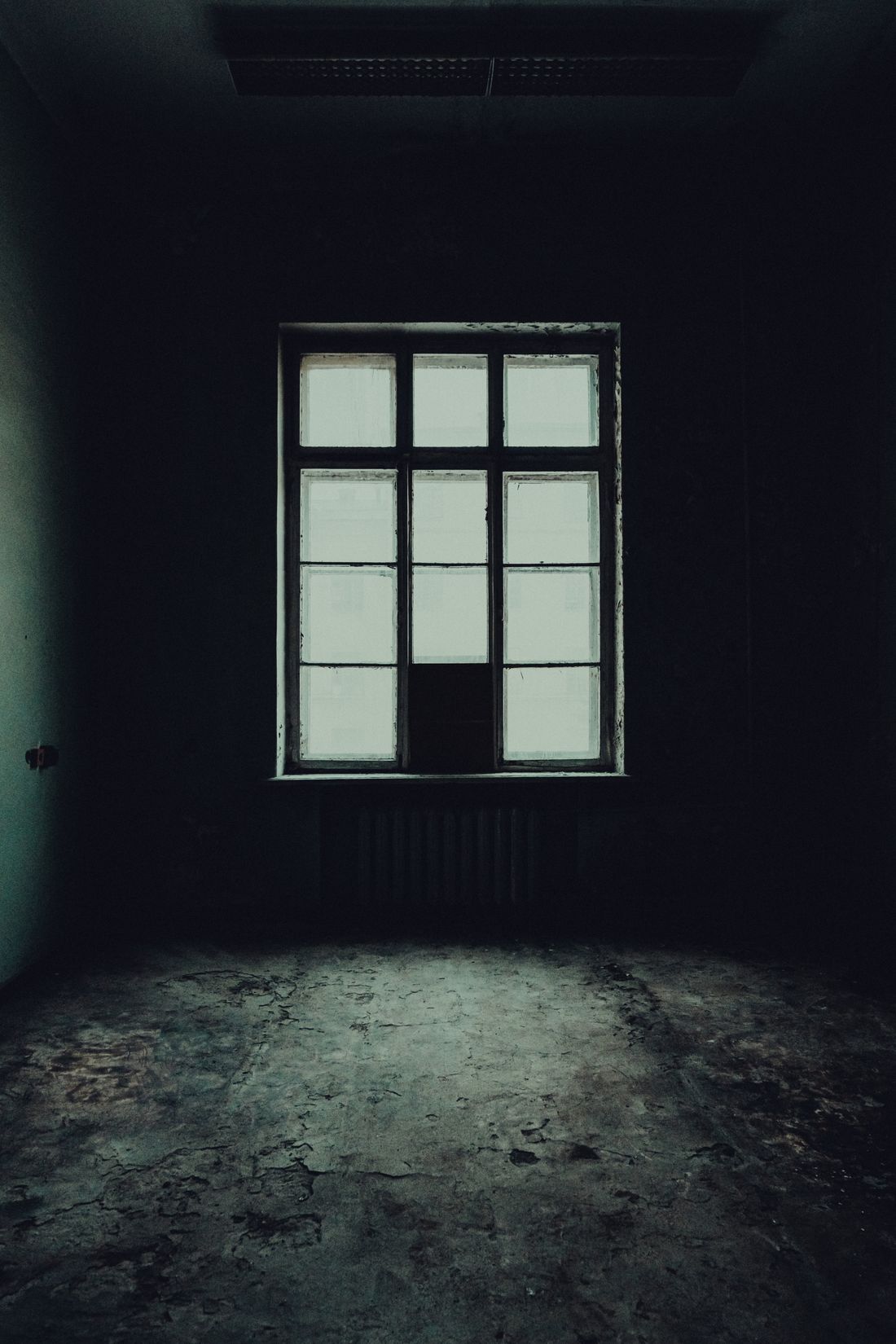
The window is real. Its reach is one windowsill.
Basement windows sit high on the wall, are small by code rather than by design, and usually look out into a well, a hedge or a strip of paving. Direct sun almost never reaches through one. What matters more is that the room behind it is often the largest in the house — so the plant ends up several metres from the only light there is.
One pothos, one basement, carried straight back from the glass:
| Where the pot sits | Estimated light | What the light is doing | Verdict |
|---|---|---|---|
| 0.3 m, against the glass | 650 lux | Just the right amount of light | Worth a try, 60/100 |
| 1 m back | 500 lux | Just the right amount of light | Worth a try, 60/100 |
| 2 m back | 315 lux | A little dim, but workable | Worth a try, 57/100 |
| 4 m back | 125 lux | A little dim, but workable | Worth a try, 53/100 |
Read where the cost lands. The first metre costs nothing at all, and the rest of the room takes a few points rather than the verdict, because the pothos is still inside its range at the back of the room — a little dim, but workable. That is the opposite shape from an ordinary room, where distance keeps costing you something the whole way back. Here the room stops mattering almost immediately.
Which has an oddly practical consequence: in a basement, moving a plant is almost never the fix. Either it is on the windowsill or it is not, and shuffling it from the middle of the room to the slightly-less-middle of the room changes nothing worth measuring. The moves that pay are getting it onto the sill, adding light, or picking from a shorter list.
Which of the usual names clear it
Whether a basement window clears the bar at all is a published question, and the published floors do not agree: the low band starts at 25 foot-candles for one service, 75 for another and 100 for a third, and one of them names the level below which a plant simply does not keep going.
| Published by | The figure | What it is a figure for |
|---|---|---|
| extension.msstate.edu | Below 50 fc | The floor: “Usually, an intensity of less than 50 foot-candles will not sustain plant life for very long”. |
| extension.msstate.edu | 50 to 500 fc | Its low band: “low represents 50 to 500 foot-candles”. |
| extension.msstate.edu | 1 to 3 feet | On lamps: “For best results, most plants grown under artificial light must be grown within 1 to 3 feet from the light source”. |
| extension.arizona.edu | 25–75 fc | “low, 25–75 fc”, and the places it names are “areas more than eight feet from windows as in the center of a room, a hallway or an inside wall”. |
| extension.illinois.edu | 75 foot-candles | “Low Light (75 foot candles)”, against “Outdoors, the amount of sunlight that is cast may be 10,000 to 12,000 foot-candles.” |
| extension.psu.edu | 100 footcandles | “a common baseline for low light is 100 footcandles”, with one snake plant’s own spot measured “as low as 25-foot candles in mid-morning”. |
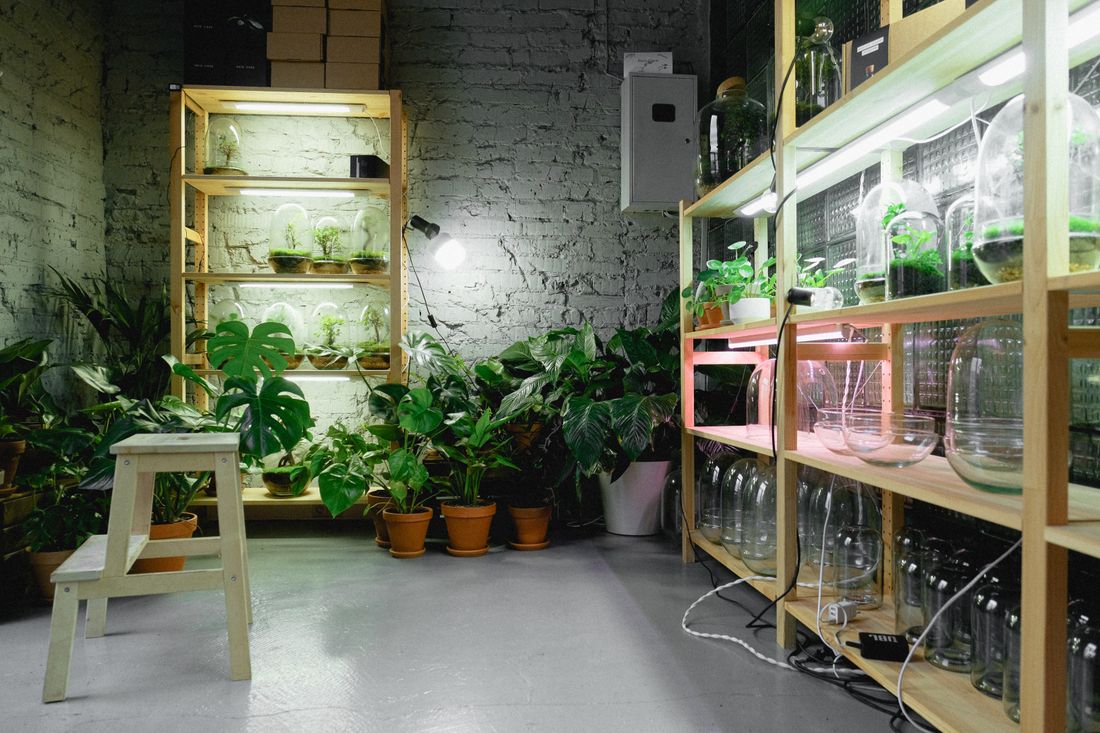
Take the eight names that show up on basement lists and put each of them on a shelf a metre in from that window — a realistic spot, and already past the sill:
Every row, one plant each (8)
| The plant on the shelf | What the light is doing | Verdict |
|---|---|---|
| Golden pothos | Just the right amount of light | Worth a try, 60/100 |
| Spider plant | Too dim here | Not the best fit right now, 39/100 |
| ZZ plant | Just the right amount of light | Worth a try, 57/100 |
| Snake plant | Just the right amount of light | Worth a try, 58/100 |
| Heartleaf philodendron | Just the right amount of light | Worth a try, 60/100 |
| Peace lily | Just the right amount of light | Worth a try, 62/100 |
| Parlor palm | Just the right amount of light | Worth a try, 65/100 |
| Cast iron plant | Just the right amount of light | Worth a try, 65/100 |
Seven of the eight hold. The only one that does not is the spider plant — and it is on almost every basement list. It is a genuinely tolerant plant, but it sits one light band higher than the ZZ and the snake plant, and a metre into a basement is where that band stops being fed. It will not die quickly. It will sit there for a year without growing, which is what slow starvation looks like rather than what tolerance looks like.
The one dimension that’s cheap to fix
Now the part the lists leave out. Hold that basement sill exactly as it is — same window, same 17 °C, same 60% humidity — put a cast iron plant on it, and change nothing but whether the air moves. In sealed still air it is only worth a try, at 65 out of 100. A little movement takes it to 93, moderate movement to 99, and a strong draught back to 93.
That is the whole range, and only the still air is a problem. Nothing else about the spot changed, and nothing else about the spot can easily change: you are not going to raise the ceiling or move the window. The air is the one dimension in a basement that a fan on a low setting fixes outright, and it is worth more here than any plant swap on the list.
It does not do that for every plant. Run the same test on a peace lily or a ZZ and the needle barely moves — they are content in still air, so there is nothing to win. The cast iron plant is the one whose remaining complaint is the stillness, which is what makes it the best-matched plant for a basement rather than merely a surviving one. The general version of that argument, with the numbers, is on the airflow page. One room gets that airflow for free: a hallway, where the same plant reaches a great fit with no fan involved.
What genuinely works
On the sill or a metre in
 Cast iron plant: the closest thing to a natural fit down here
 ZZ plant
 Snake plant
 Peace lily
 Parlor palm
 Heartleaf philodendron
 Golden pothos
Only with a grow light
 Spider plant
Notice that the one plant in the second column is not a fragile one. The spider plant is among the toughest houseplants sold. It is there because a basement is genuinely dark, not because it is delicate.
What won’t work here (honestly)
- Anything chosen for the humidity. A damp basement sounds like a gift for a plant, and on the numbers it is worth almost nothing: hold the light and the temperature where a basement puts them, and swinging the humidity from 30% to 80% moves a peace lily by three points. Humidity only becomes a real constraint after the light problem is solved, and down here it never is.
- Putting it “near” the window. Near is not a distance the light cares about. On the sill scores the same as one metre in, and four metres in still lands on the same verdict.
- Unheated basements, for most of the list. A basement that sits at 12–14 °C through winter takes the ZZ plant out too, and at that point the room needs cold tolerance as well as shade tolerance, which is a much shorter list.
- Expecting a plant to fix the room. Plants do not dehumidify a basement in any amount you could measure. If the room is damp enough that you are thinking about it, that is a job for a dehumidifier, and the plants are along for the ride.
Check the spot before you carry anything down
Every score above comes out of the same engine that runs the free spot checker, applied to a described basement rather than a measured one: we hand it a window direction, a distance, a temperature, a humidity and an airflow, and it returns the verdict. The lux figures are estimates derived from that description, not readings taken in anyone’s basement. Yours will differ most in what is outside the window — a clear well and a hedge are not the same window — and that is the one input the arithmetic cannot see.
Which is exactly the case for measuring it rather than guessing. The free spot checker estimates the light at one specific place from your window direction and distance, in your browser, with nothing to install.
Published August 19, 2026 · Last updated August 30, 2026
