The summary above the results gives two numbers in the same breath: put it three to six feet from the window, or two to three feet back if it is not right on the sill. A care blog further down warns that snake plants hate the searing direct rays of a south window without some buffer. A grow-light company recommends three to six feet, from an east or west window.
Every distance in that paragraph is under two metres. Scored at four distances in a room at 21 °C and 45% humidity, our engine flags all of them, and the flag does not clear until three metres.

Worth a try
It can work here with a little care.
A bit bright, but workable
Comfortable temperature
Humidity suits it
Airflow isn't quite ideal
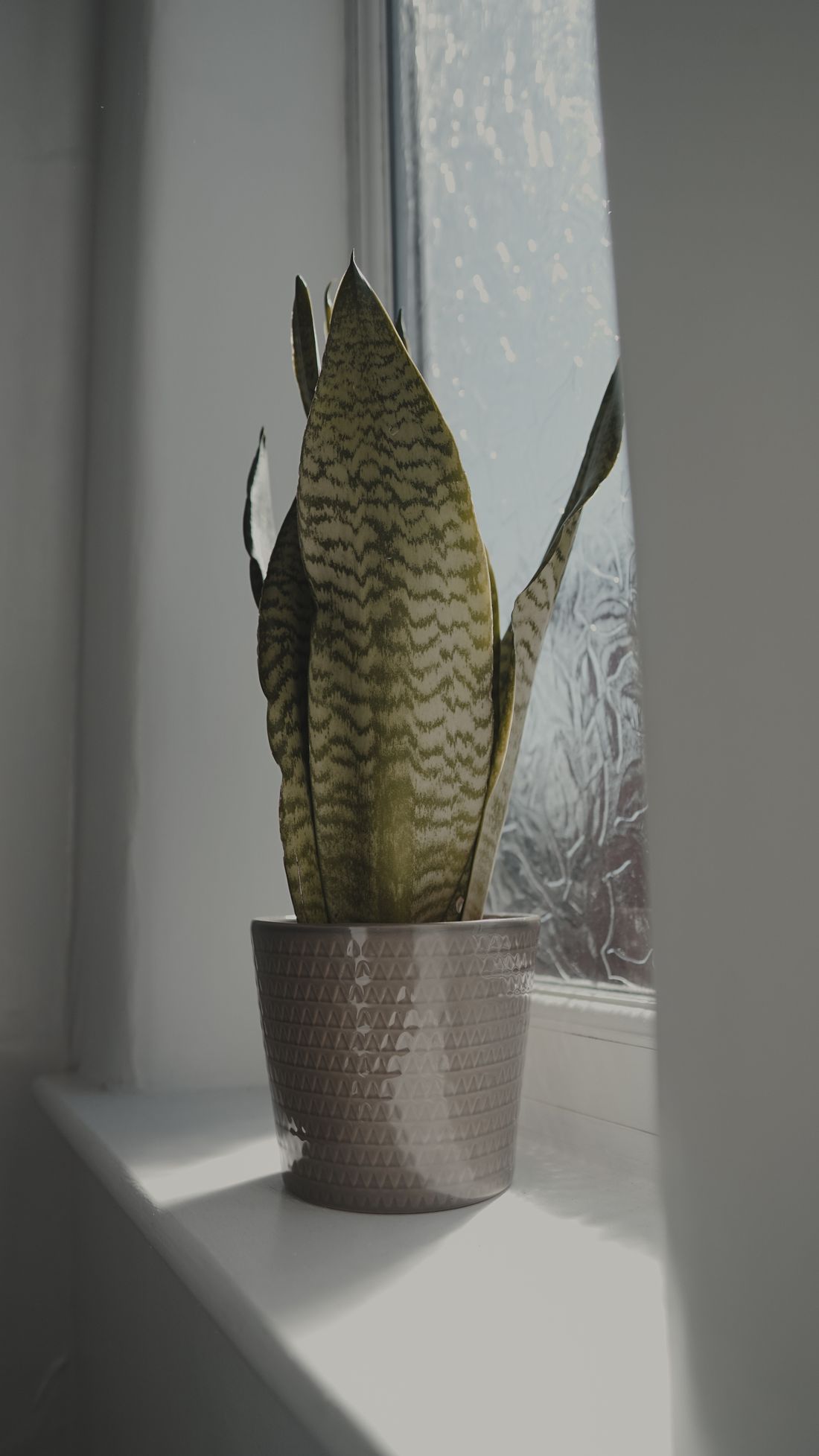
Can a snake plant be in a south-facing window?
Before our own scoring says anything: we gathered every published figure we could find for a snake plant. 8 of them, from 7 separate sources, in 3 different units. They are reproduced below exactly as each source writes them, and nothing here is converted.
| Who publishes it | What it says a snake plant needs | What the figure is |
|---|---|---|
| theplantrunner.com | 300–800 lux | True low-light crew (ZZ, snake plant, cast-iron plant, some ferns) |
| houseplantjournal.com | 100 foot-candles | Sansevieria — minimum indirect light |
| houseplantjournal.com | 200 foot-candles | Sansevieria — good indirect light |
| growlightmeter.com | 5 – 10 PPFD / DLI | Snake Plant |
| extension.arizona.edu | 25–75 foot-candles | listed under the heading "Low Light (25–75 fc)" |
| apps.apple.com | 500 lux | per-plant figure — thrives at this level |
| houseplantsnook.com | 50–100 foot-candles | chart fc level |
| soltech.com | approximately 64–98 PPFD / DLI | Snake Plant FAQ — target PPFD by size |
It can live anywhere in that room. That is the reputation, and the reputation is earned. The score is a different question, and the score says three metres: 94 out of 100, against 64 to 66 everywhere closer.
Worth saying plainly, because the flag looks alarming next to a plant famous for surviving neglect: flagged here means the light is brighter than this plant’s preferred band, not that it is dangerous. It is the difference between surviving a spot and suiting it.
The numbers by distance
| Distance from the glass | Estimated light | What the light is doing | Verdict |
|---|---|---|---|
| 0.3 m, against the glass | 13,000 lux | A bit bright, but workable | Worth a try, 64/100 |
| 1 m back | 10,000 lux | A bit bright, but workable | Worth a try, 65/100 |
| 2 m back | 6,300 lux | A bit bright, but workable | Worth a try, 66/100 |
| 3 m back | 3,969 lux | Just the right amount of light | Great fit, 94/100 |
Three metres from a south window is usually the middle of the floor or the far wall, and it is the spot most people would look at and assume was too dark for a succulent. It is the one that scores. If your room is a different shape, you can check your own spot free without installing anything.
Which snake plant you bought changes the answer
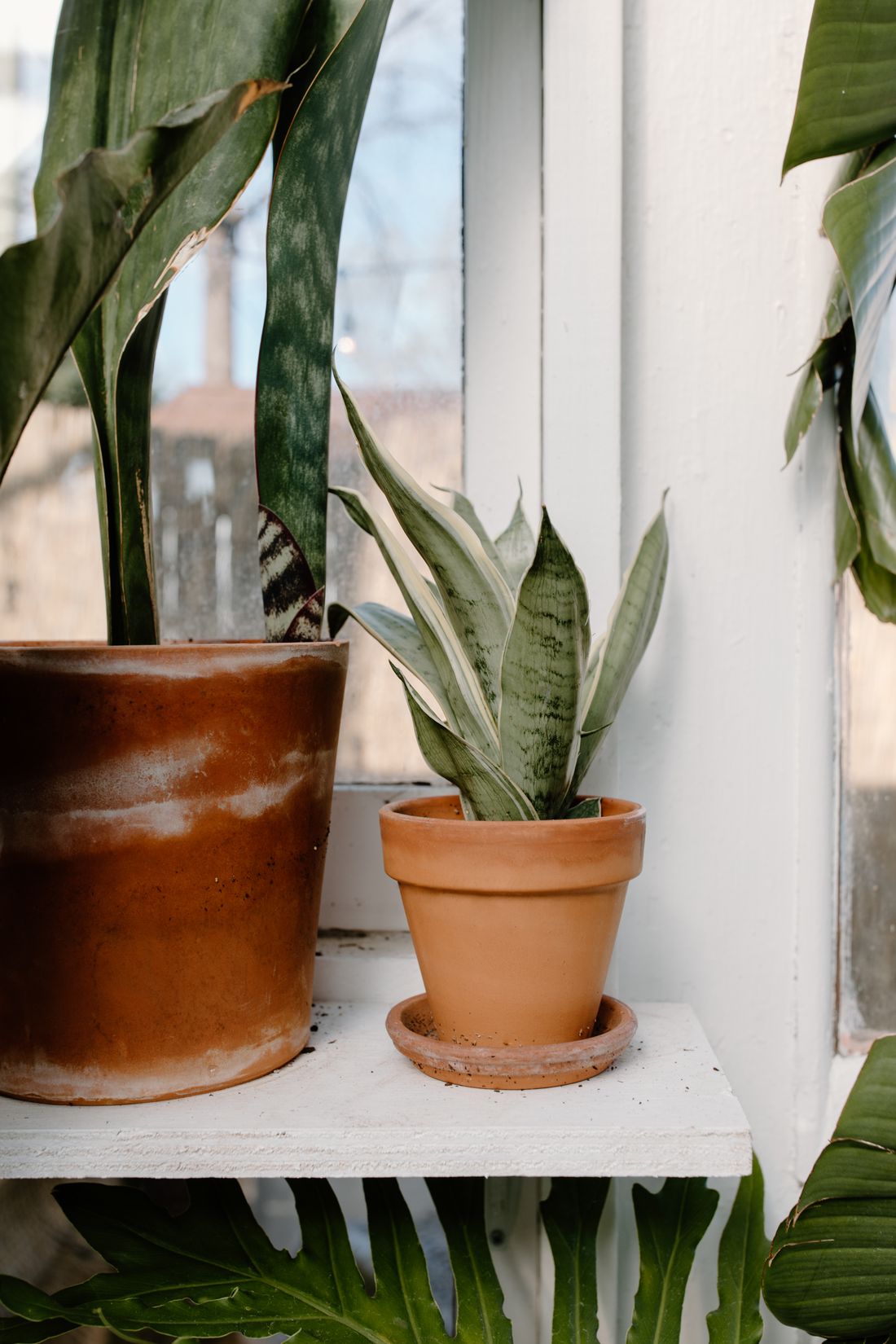
The scoring above is for a bird’s nest snake plant, the low rosette sold as Hahnii, which our care data records as a low-light plant. Taller varieties in the same family are not all filed the same way, and a plant recorded as wanting more light would clear the flag closer to the window than this one does.
That is a real difference and it is invisible on a shop label, where everything in this group tends to be sold under one name and one care card. Here is the same one-metre spot, scored for five of them:
| Which one you bought | What our care data asks for | Verdict |
|---|---|---|
| Bird’s nest (Hahnii) | low, shade-friendly light | Worth a try, 65/100 |
| Plain snake plant | low, shade-friendly light | Worth a try, 65/100 |
| Moonshine | low, shade-friendly light | Worth a try, 65/100 |
| Variegated (Laurentii) | bright, indirect light | Great fit, 93/100 |
| Dwarf (Futura Superba) | bright, indirect light | Great fit, 94/100 |
Twenty-eight points between two plants that a shop will sell you off the same bench, at the same spot, on the same afternoon. If you know which variety you have, it is worth checking that rather than the family.
The band behind all of these numbers is set out on its own page: ideal from roughly 400 lux up to about 6,000, which is why a south sill at 13,000 reads bright rather than dangerous.
What three metres looks like in a real room
Three metres from the window is the far wall of a small bedroom, or the middle of the floor in a living room. In a lot of flats it is furniture rather than a plant stand, and it is fair to say so: if your south-facing room is only two metres deep, then it does not contain the spot that scores 94, and worth a try is the honest ceiling for that room.
That is not a reason to give the plant away. A snake plant at 66 out of 100 is a plant that will live for years and look slightly bleached doing it. It is a reason to stop reading the flag as an error, and to know what you are trading when you keep it on the sill because that is where it looks good.
Three metres back is where this one finally clears. The south-facing window guide has the plants that never needed the distance.
Why a south window is the harder case
A west window and a south window both deliver direct sun, and this plant is a good deal happier in the west one, because the west window we scored delivers about 7,800 lux at the glass against 13,000 for south. The west-window scoring is here, and it clears much closer in.
The cold end matters at the other window. This plant’s floor of 15 °C is the second highest of the four usually named as plants that tolerate cold drafts, where the four are scored side by side.
The other half of the south problem is heat and drying. Bright light dries the pot faster, and a snake plant that gets watered on a schedule set in a dim corner will be sitting in wet soil for a fraction of the time it used to. That is usually a good thing for this species, right up until the schedule is not adjusted at all.
How it tells you the spot is wrong
- Too much light: leaves take on a bleached, greyish or yellowed look, most obvious on the side facing the glass, and the darker banding fades.
- Too little light: new growth comes in narrow and floppy, and the rosette opens outward instead of standing up. Leggy growth is the general version of that.
- Soft base: water, not light. Almost every dead snake plant is a watering story.
The room is not the spot
We put a phone down in six places in one living room on a clear afternoon:
| Spot | Reading |
|---|---|
| At the bright window | 20,000 lux |
| 1 m from the window | 15,000 lux |
| 2–3 m away, in window shade | 3,500 lux |
| Middle of the room | 570 lux |
| Darker side of the room | 119 lux |
| The dark corner | 18 lux |
That room’s orientation was never written down, so those are not south-window figures and we are not presenting them as any. What carries over is the steepness. The numbers behind it are in the six-point measurement of one living room.
By GrowSpot · Published August 10, 2026 · Last updated August 30, 2026
